High-rise slab support demands comprehensive capability in which formwork, falsework, and safety systems are designed and operated as an integrated whole. In particular, for super high-rise building projects in the city center, short construction periods, limited yard space, strong wind countermeasures, and load path visualization tend to become bottlenecks. The selection of falsework props and the planning of reshoring (back-propping) are key to achieving both quality and safety.
This article introduces cases of slab support employed at actual super high-rise construction sites.
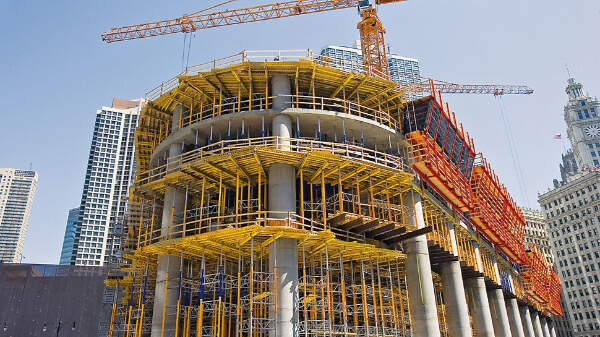
In densely populated urban areas, mixed-use buildings often allocate lower floors for commercial facilities and shared spaces that require large open areas. Special support is required on the lower floors to prevent load concentration on peripheral areas or a small number of columns.
In the super high-rise mixed-use building constructed along the Chicago River in the United States, a plan was adopted to address this challenge by using a large number of aluminum and steel props to distribute and support the loads across a wide area.
By combining PERI’s aluminum MULTIPROP props and steel PEP props, the forces transmitted to the underlying structure were effectively dispersed.
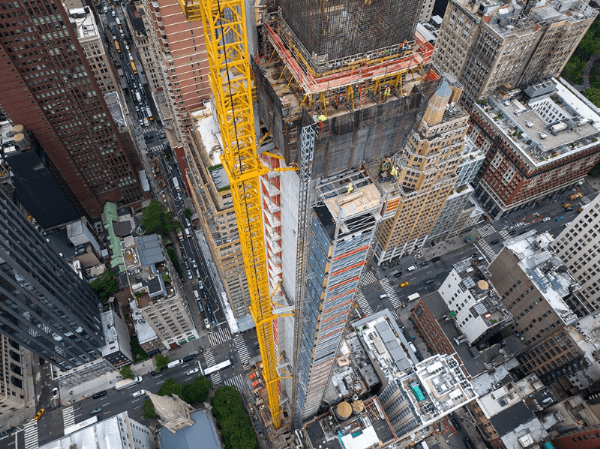
This is a case study on a high-rise apartment constructed on a narrow city block. A CC-4 panel-type horizontal formwork system was adopted to support the floor (slabs), and high-strength ALUPROP was used for the props.
The CC-4 formwork is made of lightweight and easy-to-handle panels. This ensures smooth on-site work, especially as the method of treating the edges is easily standardized. Due to its high strength, ALUPROP enables swift progression of the entire process from formwork installation to dismantling and reuse.
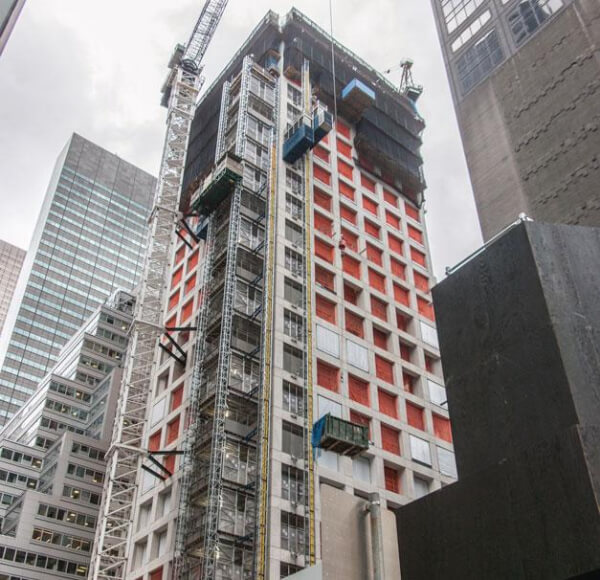
In super high-rise buildings, it is essential to control structural displacement to reduce wind-induced sway, and to design the support system with consideration for long-term effects such as deflection and shortening (creep and shrinkage).
This case used a method that advanced the construction of walls, columns, the central building core, and floors in an integrated manner in line with the project schedule. In particular, Doka’s Staxo 100 was used to support the floors.
Staxo 100 can withstand heavy loads, allowing for a reduction in the number of supporting columns, which reduces obstructions to crane operations and pedestrian traffic.
The falsework was pre-assembled into units, making it stable for use even in high, windy locations. The installation and dismantling work on each floor was carried out smoothly.
Advertiser Disclosure:
We receive compensation from some of the companies listed below.This compensation may affect which companies are included and the order in which they appear.
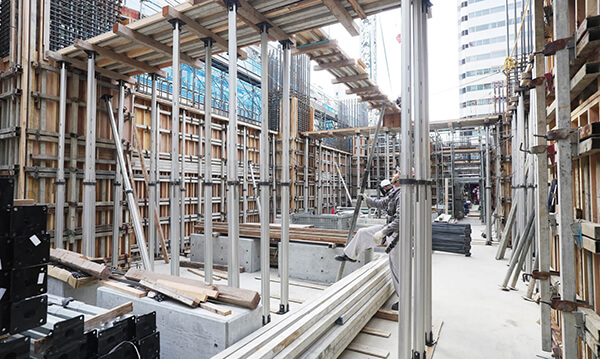
Source: https://www.forbuild.co.jp/material/alpa.php
| Unit Weight |
8.9/11.1 kg |
|---|---|
| Load Capacity |
19.0~36.0 kN* |
| Material | Aluminum |
| Max Length |
3,490mm |
*When the upper end is fixed to timber and the lower end to concrete
*Based on the ARPA 45 model.
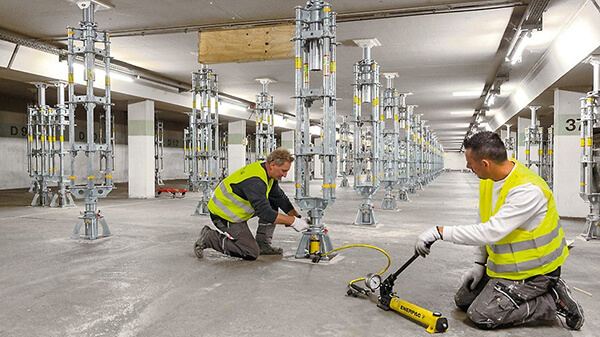
Source: https://www.peri.ltd.uk/products/peri-up-flex-heavy-duty-prop-hd.html
| Unit Weight |
91.03~265.98kg |
|---|---|
| Load Capacity |
Up to 200 kN |
| Material | Steel |
| Max Length |
Approx.8,330mm |
https://www.peri.ltd.uk/dam/jcr:cb5a5bf0-8e05-4d70-b6fd-780f3cf91333/peri-up-flex-hd-prop.pdf
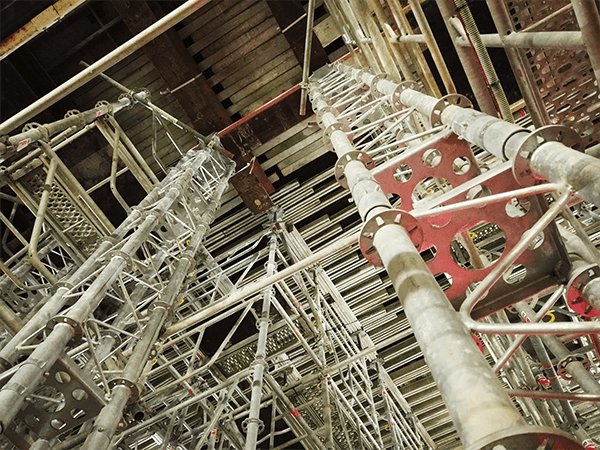
Source: https://www.altrad-coffrage.com/en/solutions/shoring/props/tetrashor.html
| Unit Weight |
Approx. 131–159 kg |
|---|---|
| Load Capacity |
Up to 400 kN* |
| Material | Hot-Dip Galvanized High-Tensile Steel |
| Max Length |
17,000mm* |
*Applicable to single-leg prop configuration onl
